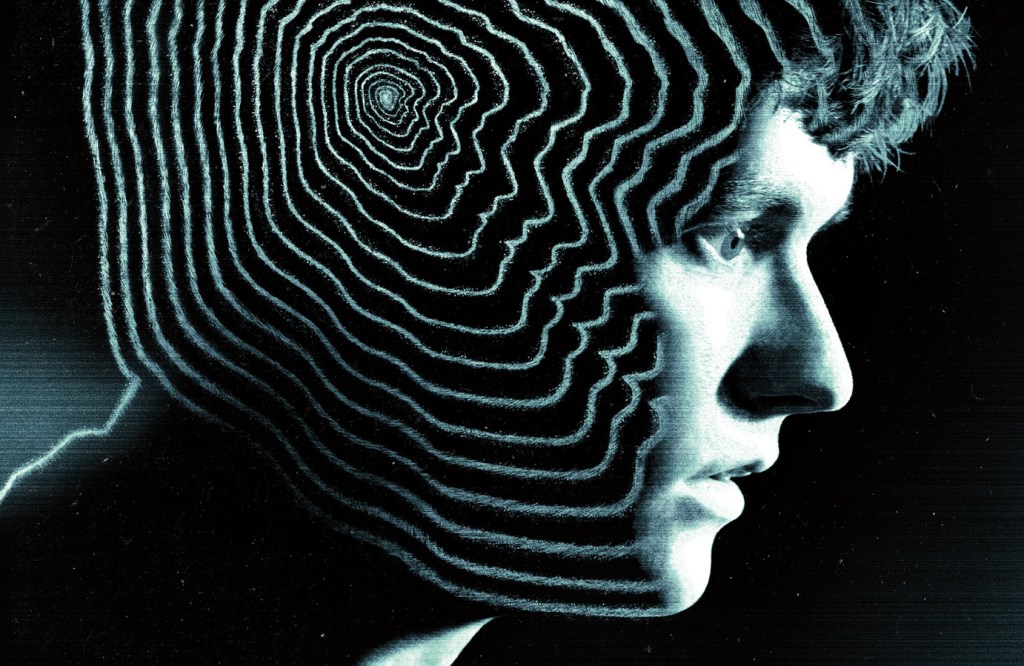
OVER the last few days I’ve been preoccupied mulling over a film spin-off of the existentially challenging Netflix series, Black Mirror. It is not another static forty-five-minute story where you passively watch. Instead, we get to pick the choices for the main character as the story unfolds, so interactive fiction. Thus this post is born!
Black Mirror: Bandersnatch takes the long-running series’ usual existential themes and blends the fourth-wall into it, pointing to us periodically throughout the experience. We are prompted to choose from two choices most of the time, but there are special circumstances that give us only one based upon our path for the playthrough. Still, context of this piece is important and our interactivity is not simply a gimmick to goad viewers into the engagement. Part of the main focus is our choices in relation with what the main character, Stefan, wants to do (SPOILER ALERT).
To get more specific, Stefan is a game developer who suffers from illness and depending on the choices you make for Stefan it sends us on a differing path. Since I am late to this party, plenty of content creators have discovered multiple endings(SPOILER ALERT), including a secretive one. Everything from drug taking to murder occurs throughout these playthroughs, each with significant consequences. The fourth-wall is broken to torment Stefan, who feels his decisions are not his own. He even tries address us during a mental episode.
The film, much like the show’s title, is reflecting our cheap thrills back onto us. We are the arbiters of Stefan’s suffering. By our hand, the story will run its course and ruin his life in a variety of flavors, and its all for our entertainment. Ultimately that’s the comment on our society. In an age of clout-chasing, lightning fast search results, and a constant need for satisfaction, we will stoop as low as poking at Stefan like a frog sliced open on a tray. We explore until there is not anything more to disconnect or destroy. Then, we move on the the next thing, barely regarding what we have just done to achieve that entertainment.
While I personally feel there are aspects that could be better, it is a worthy filmic entry into interactive fiction.
Question of the day: What are other aspects of the storytelling that could be made interactive in the context of a movie? I feel like these kinds of productions would prove a logistical nightmare, the payoff for an even more interactive film could be intriguing. Who knows what other themes can be explored in an improved version of this concept.
Until next time, dear READER.
 Delving into Wor(l)ds