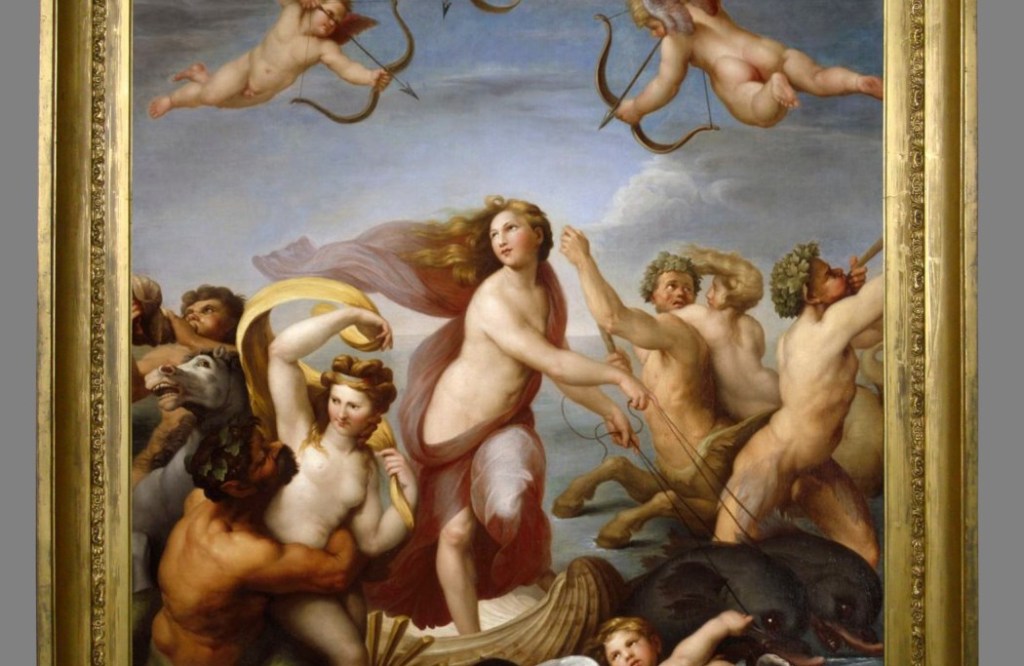
FOR today’s entry, I’m not going to present gameplay, only because I used a few extensive walkthroughs, which I will post in the conclusion of this post. Instead, I want to talk about Emily Short’s Galatea from it’s historical beginnings and how Short has adapted the Greeco-Roman Myth with modern concepts. I think the piece is quite great and strongly recommend people take a look at it, especially now that you’ll have the walkthroughs.
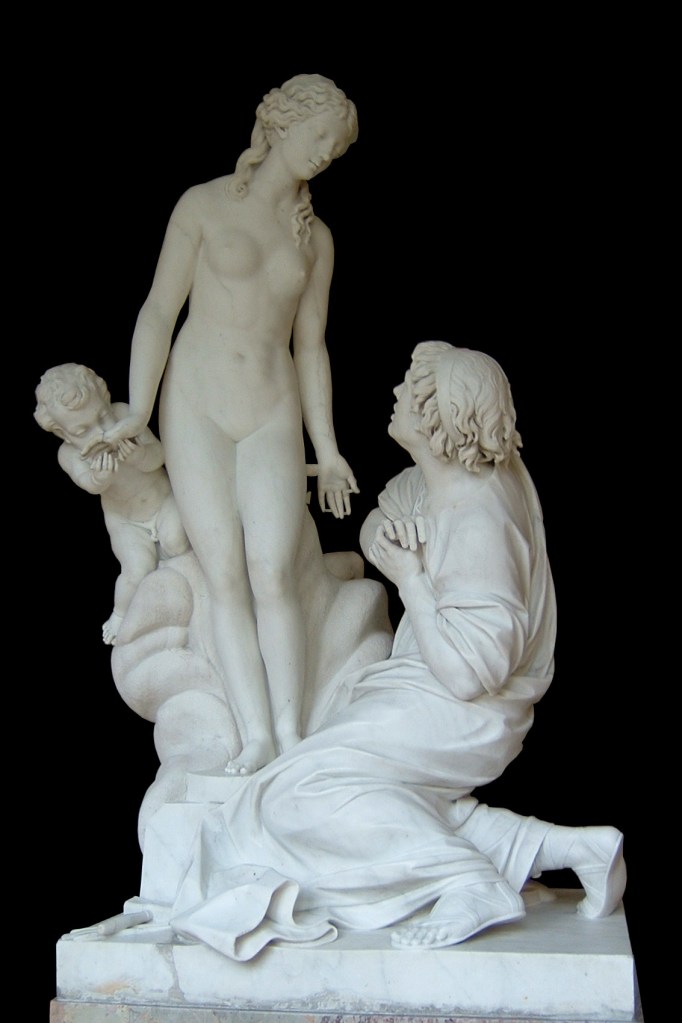
For those of you who don’t know the classic myth, allow me to run it by you real quick. The myth revolves around a stone carver, Pygmalion, who sculpts a woman out of marble. He ends up falling in love with her and pray to the God, Venus, to bring the statue to life. Venus grants his prayer, and Galatea is brought to life. She and Pygmalion go on to live happily ever after…so the story goes.
Enter Emily Short’s take on Galatea. Instead of a man falling in love with a stone carving, Galatea is an artificial intelligence (A.I.) unit with starkly realistic features of a woman, whose troubled artist commits suicide, at least according to the plaque around her. And while, yes, you can learn about the artist, that is just one of the narrative paths that is offered through your conversations with Galatea.
I won’t spoil any of these endings, rather I want to examine the fundamental idea behind the piece. Beyond the base inspiration Emily Short drew from to start the concept, Short’s direction with examining the dynamics of man’s relationship with technology and even the relationships between men and women. The obvious line of reasoning here is mankind’s strive to make bigger, better machines that mimic our own behavior. In the modern age, it’s all about how rapid development of machinery is putting humans out of work because are cheaper to run (no minimum wage, health care of 401ks, just an electric bill) and more efficient. In a way, man is creating the very idea, or child of an idea that could blossom and replace him. That’s just in one breath.
In another, the relationship between men and women can also be drawn upon from the piece. There is a natural barrier we put up between ourselves and inanimate objects. However, the question remains whether or not people could tell the difference between the two if they become increasingly human. While I’ve actually taken a class that tackled the concept (we concluded they could never mimic human behavior because machines operate on syntax WE give them, making sentience impossible), the stigma just between men and women still exists due to the differences of social and biological factors. In a way, it’s like the opposite sexes speaking with one another can feel alien in it of itself. At least, that is the impression I get from a couple of the interactions put in by Emily Short.
No matter where you come down on the idea, I think it is still an endlessly debatable topic that we will never know the answer to, and I don’t know if we want to find that answer. The human experience is ours to live, and many of our lives could feel like a dream. Maybe the disconnection is now happening on reality vs. virtual scale too, but now I’m just getting into the weeds on this.
Question of the day: Is our fascination with machines a healthy one, even if it costs peoples’ livelihoods to achieve their technological peak?
Until next time dear READER.
The following are directions to get through the various playthroughs of Galatea. I strongly recommend it!
Delusions
x her. galatea, hello. read placard. a exhibit. t exhibit. think about exhibit. think about komininsky. think about galatea. galatea, look at galatea. alternate last move: a pedestal
Eliza
x galatea. x backdrop. a her. read placard. a artist. a waking. a pain. a artist. a loneliness. t suicide. z. a him. a fits. a childhood. z. a memories. t me. t family. t parents.
Friendship
x galatea. touch her. galatea, hello. x placard. a waking. z.
a artist. g. a sale. a inspection. a travel. a customs. a owners.
a exhibit. t exhibit. t suicide. hug her. think about owners. enter pedestal.
Kiss
x her. a her. touch her. touch her back. a artist. z. z. a studio. a ocean. z. x her. x hair. touch hair. a hair. x hand. touch hand. a hand. x her. kiss hand. a backdrop. x ear. touch ear. x cheek. touch cheek. think about animates. think about her. read placard. a waking experience. galatea, turn around. kiss her. g.
Love Lost
x her. a her. read placard. a pygmalion. g. a loneliness. a suicide. a suicide. think about her. touch her. touch back. touch gown. a gown. a owners. a backdrop. x cheek. touch cheek. a carving. g. a pain. a polish. a him. a love.
Pushing Your Luck Too Far
x her. touch her. read placard. t suicide. a exhibit. t exhibit. a carving. g. g. g. a placard.
Stilton
galatea, hello. read placard. t suicide. hug her. a her. a waking. a sight. a hearing. a sleeping. g. a food. g. g. z. z. t processes.
Wizard of oz
x galatea. galatea, hello. x dress. a artist. a waking. z.
a him. a fits. a nightmares. a shades. a afterlife.
a gods. a apollo. a dionysus. a illusions. z. a masks.
restart. look behind curtain. take curtain. g.
 Delving into Wor(l)ds