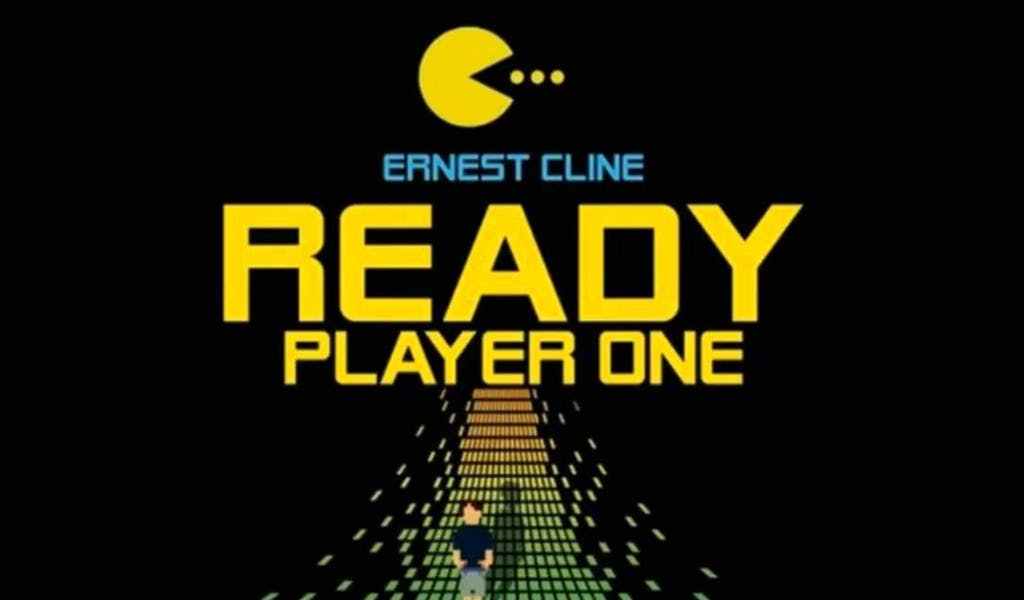
THERE are plenty of books which deal in video games, or at least their presence. However, few combine a general love of video games with the encyclopedic knowledge of the 1980’s, and beyond, with regards to pop culture icons and video game history. Enter, or should I say “start,” Ready Player One.
Ready Player One is a novel set in a dystopian future where the only escape is through an always-online paradise, the OASIS. Ernest Cline guides us through this world as Wade Watts, a teenager with a knack for playing video games well. He also becomes a walking history book for everything his idol, James Halliday, was ever a fan of. See, Halliday was a billionaire video game designer who passes away and leaves a vast fortune to whoever can find the easter egg he hid in the OASIS. The simulation itself takes up millions of miles of virtual space, making it nearly impossible to find. Thus, the Hunt begins.
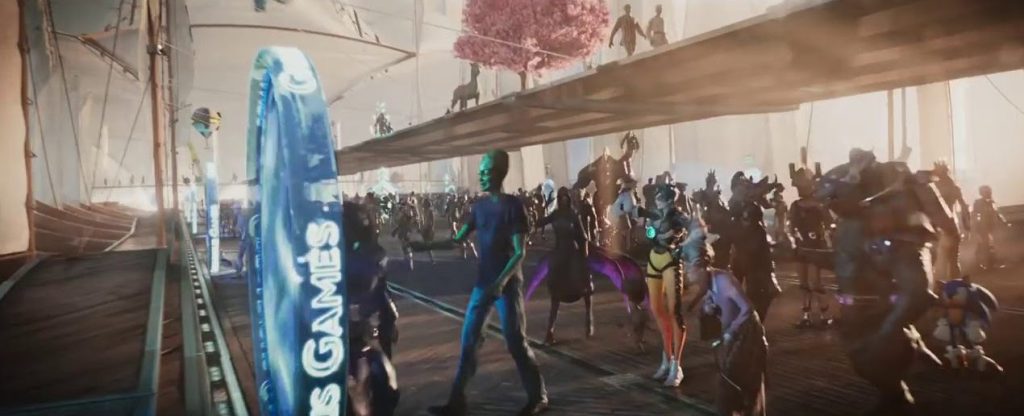
The book itself is a deep-dive into everything I’ve talked about on this blog thus far, especially in regards to video games overall.
I enjoyed the book for a number of reasons. Firstly, it is a well written novel with all the nuts and bolts present to guide you through to a satisfying read. But I think where this book really thrives is in the accompanying theme. I won’t spoil anything, but the ultimate message in the book boils down to “don’t waste your life through escapes, but rather the reality you cultivate outside these entertaining distractions, no matter how bad things get in the real world.” I’m paraphrasing, but that’s the gist of it.
Too often I’ve seen people use things like game consoles and iPads as babysitters. It completely disconnects these young, impressionable minds from the reality of, well, reality. Not everyone can become a YouTube superstar, and just because others have money doesn’t mean they are happy, either. What is presented online, either in a game or social media, is what people want to show. The same goes for everyday life. This kind of cognitive dissidence can lead to serious developmental issues down the road.
If I sound like a Boomer so be it, but I genuinely think this is a bad idea. I should know; I’m an example of one of these kids. And, yeah, it’s not worth it. It wasn’t worth the 4 years of stagnation, or the years of grief after the fact I still battle with now. My time in Hell is one I still recollect on with lost opportunity and bitterness, but enough about my life story.
Question of the day, dear reader:
What is your opinion of young people, kids or young adults, being allowed to spend excess time with video games, social media websites, or the Internet at large? Does it always have a negative outcome, or is Max being a pretzel (salty)? If it is positive, what are the benefits from long-term exposure?
Until next time, dear READER.
 Delving into Wor(l)ds