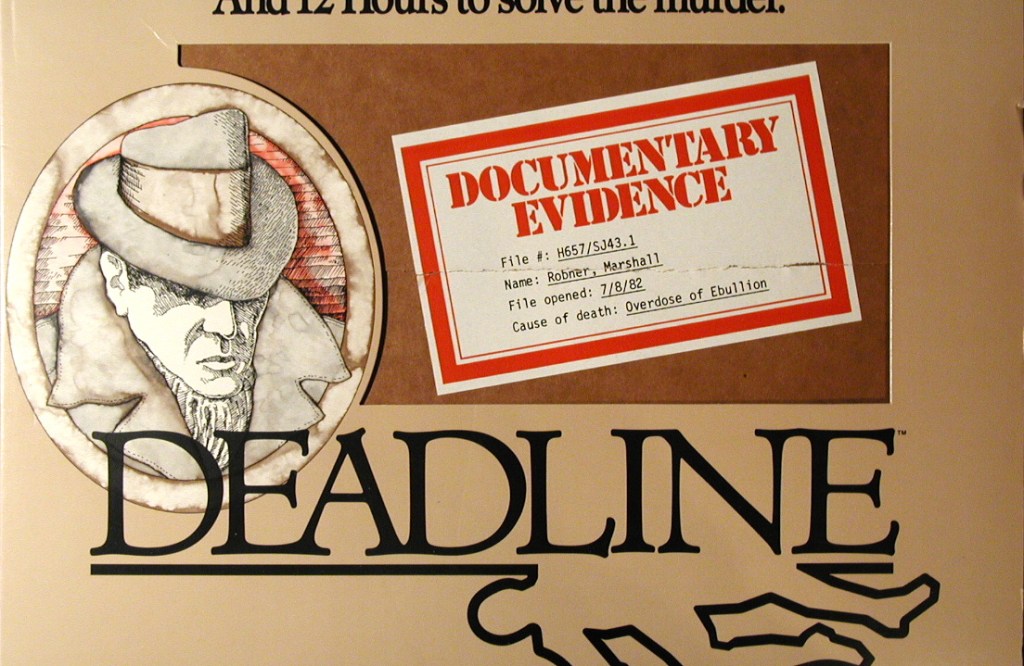
INFOCOM was quite the busy entity back in the 1980’s. Having built their brand around the Zork franchise, they looked to branch out away from their flagship title. Instead, their next game would be completely different. That eventual title, Deadline, was like Zork in its steep learning curve and difficulty only. Deadline would prove to be the first in a number of categories for video gaming.
It was the first mystery game ever made, and also introduced “feelies,” or physical extras to assist the player with the game. Feelies weren’t just a way to assist the player, though, it was actually to deter people from pirating the game. That’s because the feelies would help the player through the story. Without them, it was, and is, incredibly difficult to even know where to begin. I know because I tried, and damn is it hard!
Deadline is a beast and a half to do without assistance. This is due in large part to Infocom’s implementation of time passage as a vital component to how the game functions. Lacking knowledge of this fact will only ensure you ending up like me, spending a good hour and a half wandering around the house going nowhere fast.
Damn it, I tried! I actually tried so hard, I glitched the game and got locked in the south closet indefinitely. I’m not sure I could recreate that if I tried. It was at that point I realized I had been bested. I took the walk of shame and pulled up a walkthrough.
Yes, I am a weak man. No, I don’t regret looking up a walkthrough. In fact, looking up the walkthrough confirmed my suspicions of this game being as complex as it is. Once more, Infocom was pushing the boundaries of what could be achieved in the realm of interactive fiction and outdid themselves. I think its commendable they would even venture into straying away from their money-maker, Zork, and commit to shipping a game that didn’t have an established fan base, let alone precedent for mystery games. Yet, Deadline is just that; a trendsetter.
As always, I want to end on an overarching question. What could Infocom have done to assist the player throughout the game without relying on feelies? I ask this because, while I understand Infocom wanted to combat potential piracy, I wonder if they alienated players who didn’t have access to those feelies. While they probably didn’t anticipate where the Internet is today with its file-sharing capabilities, even way back when people passed these games around. I can’t imagine everyone had access to these feelies when borrowing a copy, not all the time anyway. An interesting problem to have, but I still respect their decision overall.
Until next post, dear READER.
 Delving into Wor(l)ds