THIS blog is about delving into words which create the worlds we love to explore.
This is true for any form of entertainment. It is through the writing where we get the characters we adore or despise, the locations we want to escape to, and/or the events we want to manipulate, interact with, or listen about as we embark on our own little adventure within their confines. The written word is deceptively alive and well in all forms of our entertainment, but none quite more literally, or curiously, than interactive fiction.
For those of you who aren’t aware, interactive fiction hands the keys of the narrative over to you, having you drive the story through the actions you perform. As you progress through any work of interactive fiction, the more the program will generate text for you to continue the experience. This will go on until the work concludes. This means winning or losing in humorous or tragic ways depending on the tone of the piece. Some are structured as novel like experiences, while other in the traditional veins of a video game. It all depends on the work.
This genre of story telling is eclectic indeed, dipping its toes in the realm of traditional novel and video game conventions to deliver an experience separate from these contemporary entertainment outlets. Like any medium, interactive fiction delivers experiences we can’t get anywhere else. While there are thousands of works of interactive fiction to choose from, I wanted to talk about a few of the pioneers as a stepping stone into this narrative genre, Adventure and Zork.
Both Adventure and Zork are credited as being the first notable works in interactive fiction, as both pushed the genre forward in different directions. It could be as simple as Adventure laying the ground work of how most other early works of interactive fiction would be structured (i.e. starting randomly in the woods, making your way through a series of caves, basic instructions and verb set, etc.).
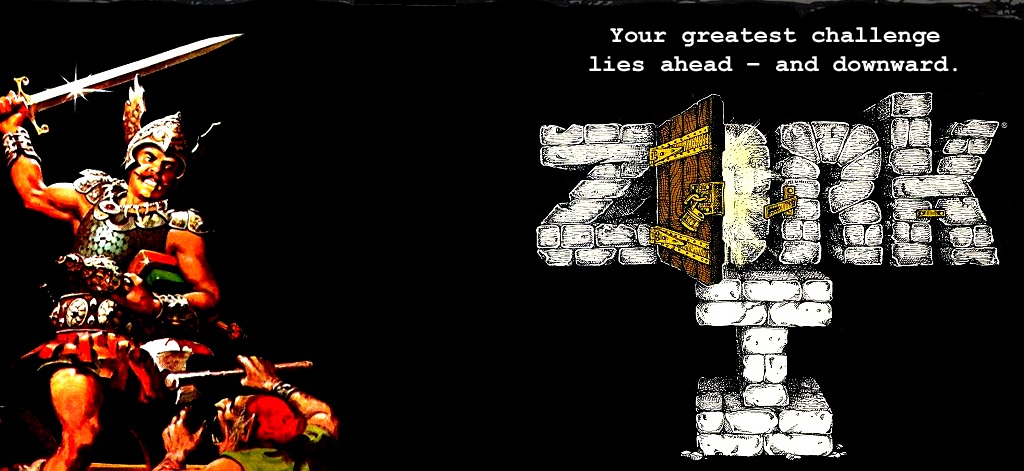
However, Zork is a different beast. While Zork borrowed the same basics introduced by Adventure, this work brought far more to the depth of the experience. Zork emphasizes inventory management skills, scoring points relating to fighting ability as you pick up treasures, brutal traps, treacherous monsters, and a cunning, bloodthirsty thief.
It is a game that challenges you far more than Adventure ever could. That shouldn’t discredit the contributions of either game, however, especially in the grander scheme of interactive fiction as a whole. These genres evolve and its good Zork came out so soon after Adventure to show how interactive fiction was growing as a narrative tool. Hopefully my attempts on Zork begin to scratch the surface as far as what kind of experiences are to be had within a work of interactive fiction.
Something to ponder if you get a chance to play either game, which I highly recommend by-the-by, is what are the fundamental differences between Adventure and Zork which show the clear progression of the medium of interactive fiction as a whole? This can be as simple as a heartier verb list, to aspects such the introduction of complex puzzles, non-playable characters(NPCs), or battle mechanics.
Until next time, dear READER.
 Delving into Wor(l)ds